
SIGNALS ANALYTICS (ACQ BY KENSHOO)
Signals Analytics helps global brands uncover actionable insights from disparate data to drive smarter product decisions with less risk.
- Built the company’s first true product design function inside a previously services-driven organization
- Co-built an innovation department with the new VP Product
- Led the product vision and UX for the new platform, supporting a $25M Series C raise
- Created and scaled a UX and product team from scratch, transforming juniors into a strong, independent team
- Introduced design thinking to the entire 150-person organization, influencing culture and cross-team collaboration
DETAILS
| Years: | 2016-2018 |
| My title: | Director of UX |
| Responsibilities: | team leadership, UX & UI design, user research & testing, information architecture, process design, cross-functional alignment |
THE CHALLENGE
DISRUPTING THE CONSULTING INDUSTRY
When I joined Signals Analytics, the company had years of success delivering insights through consulting engagements with Fortune 1000 brands. The next step was ambitious: evolve from a services business into a scalable product company.
This meant productizing a deeply analytical, consultant-driven process without losing its depth or credibility. The buyer persona (senior execs) and the user persona (analysts and researchers) had different needs, expectations, and levels of expertise. Bridging those two worlds was one of the core challenges.
APPROACH
MAKING COMPLEX ANALYSIS FEEL SIMPLE
I began with extensive internal and external research. Speaking to analysts, internal domain experts, and Fortune 500 client teams, one thing became clear: while our clients had access to mountains of data, very few could turn it into clear, actionable insights. Even when insights surfaced, connecting them into confident strategic conclusions was incredibly difficult.
The product experience needed to guide users through the full analytical journey - helping them understand where they were, how they got there, and what meaningful next step they could take. “Just answering questions” wasn’t enough, since many users didn’t yet know what to ask.
This was the foundation of the new product vision, one I imagined, shaped, and designed end-to-end before managing the execution of our PoC.
RESEARCH
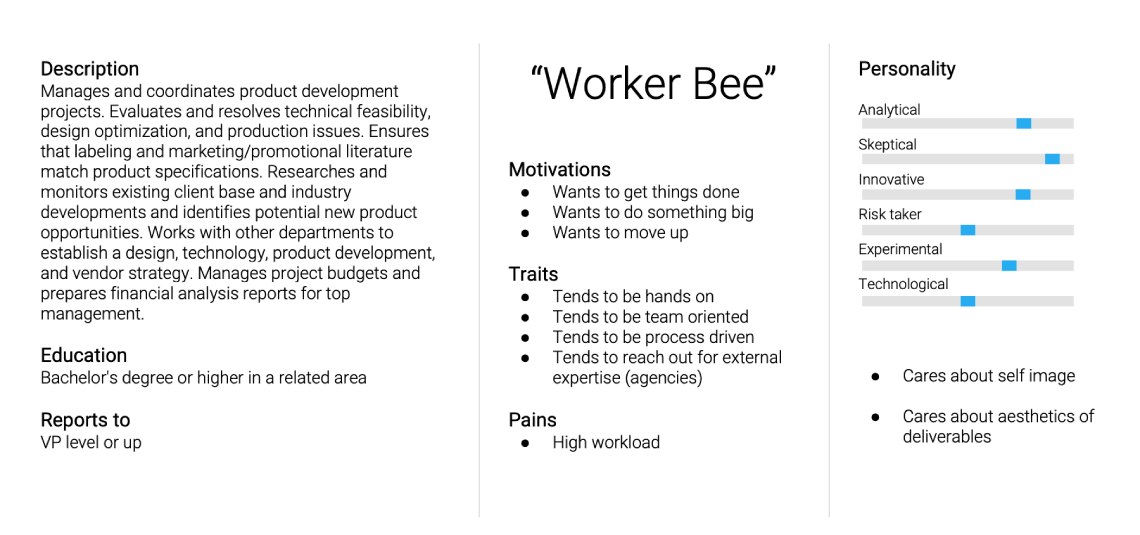
ESTABLISHING THE USER PERSONA
To ground the experience in real needs, I conducted interviews with:
- Internal analysts
- Existing Fortune 500 customers
- Potential customers in new verticals
This defined our primary persona and their workflow and not just who they were, but how they worked, where they struggled, and what mental models they relied on.
These insights aligned leadership, sales, R&D, and marketing around a new product vision.
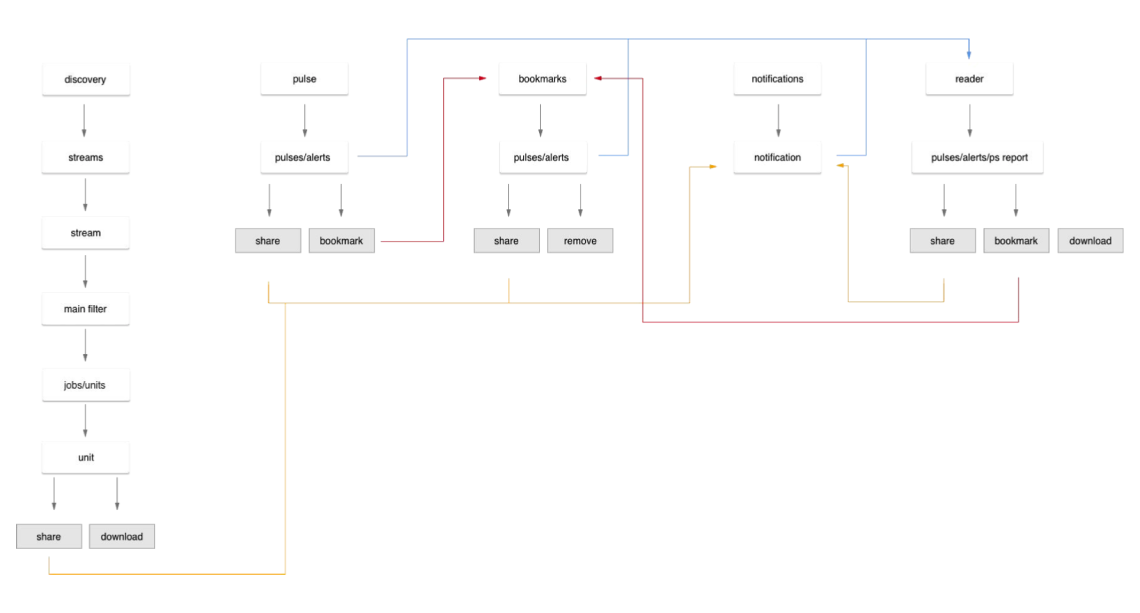
We then mapped real analytical workflows to inform product structure and create a clear path from data to insight.
UNDERSTANDING WORK PROCESSES
Understanding user behavior was one thing. Understanding their actual work process was another. We mapped out all core use cases and analytical patterns used by our customers. This allowed us to redesign content flows, reorganize key screens, and create a structured path from raw data to meaningful insight.

A CLEAR PRODUCT FLOW
A clear experience flow was built for different types of users - from novice researchers to expert analysts - ensuring retention, usability, and clarity across the entire product.
THE RESULT
A NEW APPROACH
Our first release of the new product vision was met with enthusiasm both internally and by clients. The clarity of the experience and the shift toward actionable insight significantly strengthened the company’s product story.
This new direction directly supported Signals Analytics in raising a $25M Series C funding round, contributing to its continued growth and eventual acquisition by Kenshoo.
Additional key outcomes:
- UX became part of the strategic core of the company
- Product, engineering, and analytics teams aligned behind a shared product vision
- The new design system laid the foundation for long-term scalability
- The UX team I built, originally juniors, evolved into a strong, self-sufficient team
- Company-wide adoption of UX and design thinking increased dramatically,

Users start their journey by selecting a main filter such as geography

Predefined 'narratives' guide the user through a research sequence
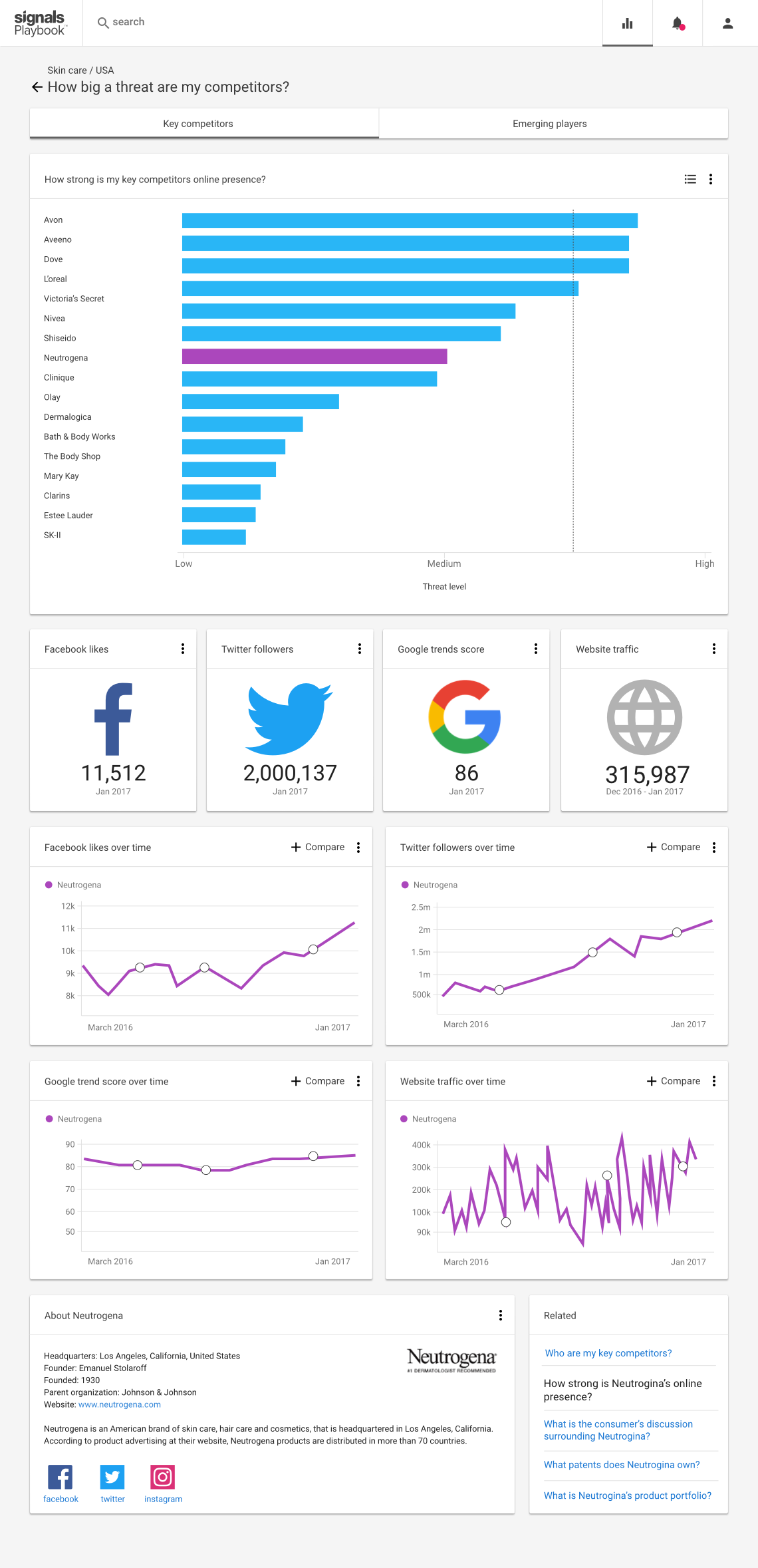
The narratives contain multiple interactive dashboards
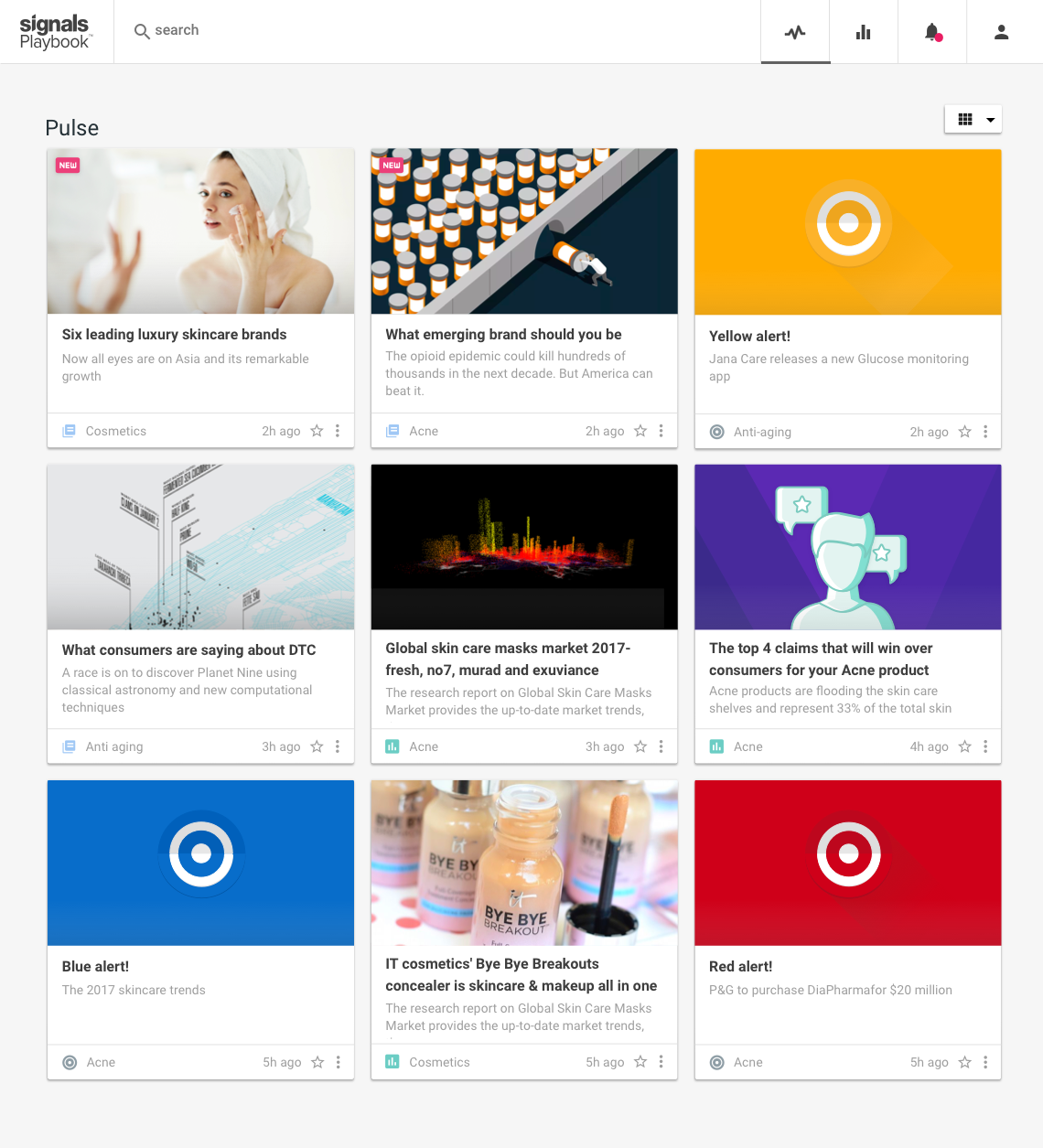
'Pulse', a built-in digest, provides reports and updates
WORK METHODOLOGIES
DESIGNING A SYSTEM THAT COULD SCALE
To support rapid growth, we established a shared design system developed jointly with engineering. Combined with clear user stories and structured work processes, this minimized ambiguity, reduced inconsistencies, and improved quality and delivery speed across the product.

Clear style guides ensure consistency in use of UI elements for design and development teams